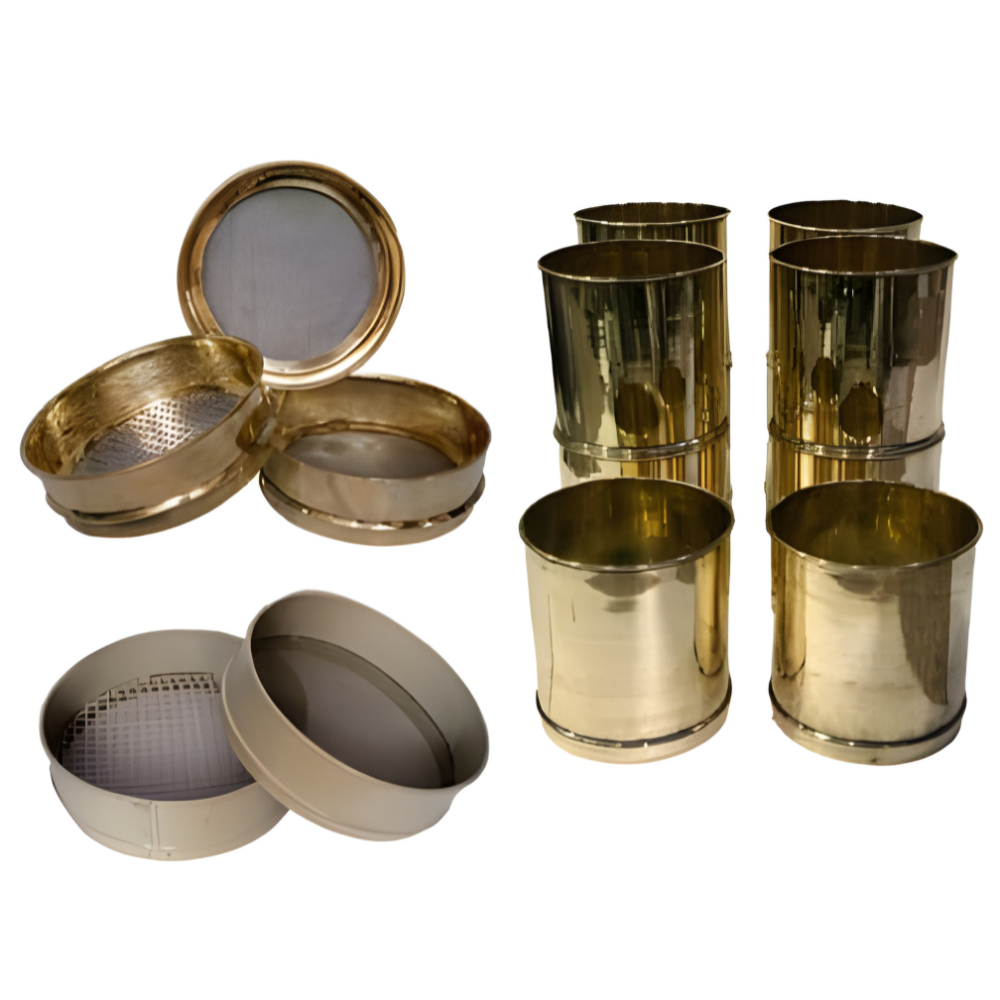
Test Sieves are one of the most important laboratory testing instruments used in civil engineering, construction, mining, pharmaceuticals, agriculture, and material testing laboratories. They play a vital role in determining the particle size distribution of aggregates, sand, soil, cement, minerals, chemicals, and other granular materials. Accurate sieve analysis helps engineers maintain quality standards and ensures that construction materials meet project specifications.
Whether you are working in a quality control laboratory, educational institution, research center, or construction project, selecting the right Test Sieves is essential for obtaining reliable and repeatable test results.
This guide explains everything you need to know about Test Sieves, including their types, standard sizes, applications, benefits, maintenance, and how to choose the right sieve for your laboratory.
A Test Sieve is a precision-engineered laboratory instrument consisting of a metal frame and a woven wire mesh or perforated plate with accurately controlled openings. During testing, materials are placed on the sieve and shaken either manually or with a sieve shaker. The particles are separated according to size, making it possible to determine the grading of the sample.
Test Sieves are manufactured according to internationally recognized standards such as IS, ASTM, ISO, and BS, ensuring accurate and consistent results
Accurate particle size analysis is essential for producing quality construction materials. Test Sieves help engineers verify whether materials comply with project specifications and industry standards.
Some major advantages include: